
Composite Fillings
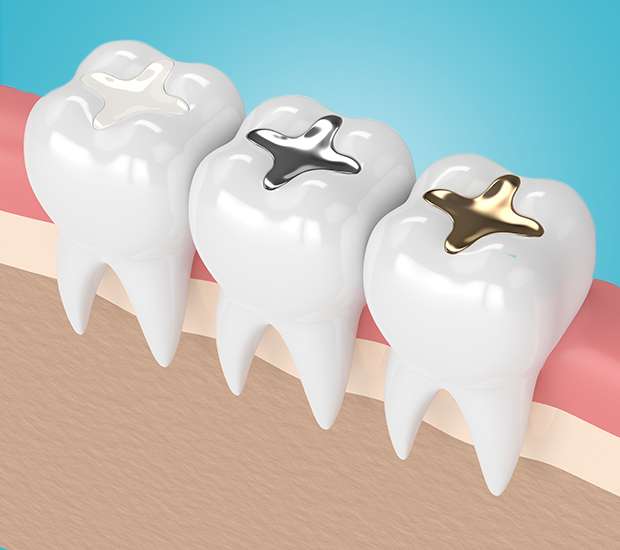
Composite fillings are tooth-colored restorations used to repair many small to moderate areas of decay or damage. The material is placed directly into the prepared tooth and shaped to restore the missing portion. Because the resin can be selected to blend with nearby enamel, it is often considered for both front and back teeth. Whether it is the right restoration depends on the size and location of the defect, the forces on the tooth, moisture control and the condition of the remaining tooth structure.
A filling repairs the damaged area, but it does not make a tooth immune to new decay or fracture. An examination is needed before choosing a material or deciding whether a filling is sufficient.
When a composite filling may be considered
A dentist may discuss a composite restoration when a tooth has a cavity, a worn or chipped area, or an older restoration that needs replacement. The American Dental Association describes composite resin as a tooth-colored mixture that can provide durability for many small- to mid-size fillings. Material selection is individualized rather than automatic.
A filling may not be enough when damage extends through a large part of the tooth, the tooth has a major crack, or the nerve and supporting tissues are involved. Depending on the examination and imaging, a dentist may instead discuss an inlay, onlay, crown, root canal treatment or another plan. These options are not interchangeable, and a page or photograph cannot determine which one is appropriate.
What happens during the appointment
The exact steps vary with the tooth and the reason for treatment, but a composite-filling visit commonly includes:
- Assessment. The dentist examines the tooth, reviews symptoms and may use dental X-rays when they are clinically indicated.
- Comfort and isolation. Local anesthetic may be used. The tooth is kept as clean and dry as practical because moisture control matters when bonding resin.
- Preparation. Decayed or structurally unsound material is removed while preserving healthy tooth structure where possible.
- Bonding and placement. The tooth is prepared for bonding. Composite is placed and hardened, often in increments, with a curing light.
- Shaping and bite check. The restoration is shaped, polished and checked against the opposing teeth. A bite that feels uneven should be reported rather than ignored.
The amount of treatment cannot be predicted from the visible spot alone. A small opening may conceal more extensive decay, while a stained groove may not require the same treatment as an active cavity.
Benefits and limitations
Composite fillings can match the tooth more closely than a metal-colored restoration and can bond to prepared tooth structure. They can be used in many areas of the mouth, but no restorative material is best for every tooth. Size, location, chewing load, cavity position, access for moisture control, health history and patient preferences all matter.
A composite restoration can stain, wear, chip or develop decay at its edge. Its service life varies, so this page does not promise a fixed number of years. Teeth with extensive structural loss or heavy bite forces may need a different restoration. If a filling repeatedly fractures, the cause should be evaluated instead of simply replacing it without review.
After a composite filling
Follow the instructions given for the specific tooth and anesthetic used. Avoid chewing while the mouth is numb so the cheek, lip or tongue is not bitten accidentally. Mild temperature or pressure sensitivity can occur after restorative care, but symptoms should trend in the right direction.
Contact the dental office if the bite feels high, the filling feels loose or sharp, or pain is severe, worsening or persistent. Swelling, fever, drainage, facial swelling or difficulty breathing or swallowing requires prompt assessment; breathing or swallowing difficulty is an emergency.
Long-term care still matters. Brush twice daily with fluoride toothpaste, clean between teeth as advised and attend examinations at an interval based on individual risk. A restoration covers only part of the tooth, and decay can develop around it if plaque and risk factors are not controlled.
Choosing care at JG Dental
JG Dental is a family, general, implant and cosmetic dental practice with offices in San Juan Capistrano and Newport Beach. This shared clinical page explains composite fillings for patients of either office. Use the office selector or booking links to choose the location that fits your visit. Availability, treatment recommendations and insurance benefits are confirmed only after the appropriate examination and plan review.
Frequently asked questions
Are composite fillings only for front teeth?
No. Tooth-colored composite can be used on front or back teeth in appropriate situations. The size and position of the restoration, chewing forces and ability to keep the area dry influence whether it is suitable.
Does every cavity need a filling?
Not necessarily. Management depends on whether the lesion is active, its depth and location, the condition of the tooth and the patient's risk. Some early lesions may be managed preventively, while a cavitated or structurally damaged area may need restoration. A clinical examination is required.
Will a composite filling look exactly like natural enamel?
The material can be shade-matched, but natural teeth have variations in color and translucency. The final appearance depends on the tooth, restoration size and material selection.
What if the tooth still hurts after treatment?
Brief sensitivity can occur, but severe, worsening or persistent pain should be assessed. It may reflect a bite issue, deeper irritation, a crack or another condition that cannot be diagnosed online.
Sources and further reading
Choose your JG Dental office
This information is shared by the practice. Services, appointment availability and individual treatment options must be confirmed with the selected office.
San Juan Capistrano — 32382 Del Obispo St Ste C2. (949) 493-6006
Newport Beach — 1501 Superior Ave Ste 302. (949) 548-8218