
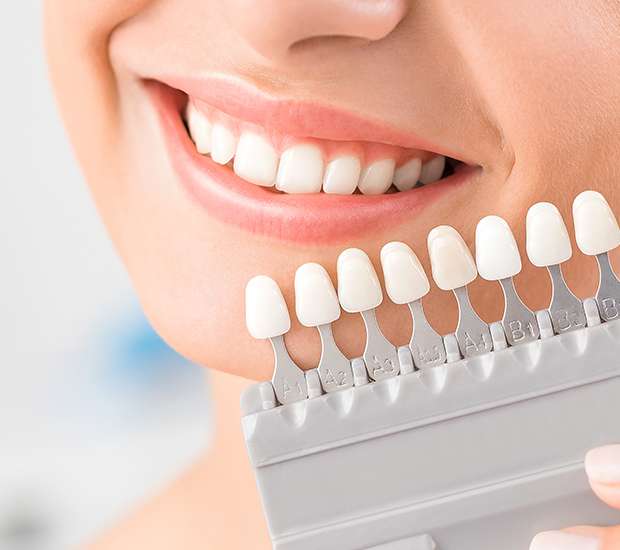
A veneer is a thin shell bonded to the front of a tooth. It changes colour, shape and edge in one step. Because a layer of enamel is removed to fit it, the decision is one to take slowly.
Veneers or something less permanent?
If the issue is colour alone, whitening is enough. If it is one chipped edge, bonding fixes it in a visit. Veneers earn their place when shape, colour and alignment all need changing at once.
Crowded teeth are the case most often over-treated. Aligners move them into position without touching enamel, and the result is your own teeth rather than a covering over them.
We say this plainly at consultations because a veneer cannot be undone. Once enamel is reduced, the tooth needs a covering for the rest of its life.
What happens at the appointments?
Three stages: planning with a mock-up you can look at, preparation and temporaries, then bonding the finished veneers. Usually two to three weeks between the second and third.
The mock-up is the important one. It is a temporary version of the planned shape placed straight onto your teeth, so you can see the length and width in a mirror, in daylight, before anything is cut.
You wear temporary veneers between preparation and fitting. They are not as strong or as pretty as the finals — treat them gently and avoid biting into hard food with the front teeth.
How long do they last and what breaks them?
Well-made veneers last many years. What ends them early is grinding, biting nails or opening things with your teeth, and gum recession that exposes the edge.
A night guard is the single most useful protection if you clench. It is not an upsell — grinding is the most common reason veneers chip.
The gum line matters as much as the veneer. Keeping cleanings regular is what stops a visible margin appearing at the edge after a few years.
Will they stain like natural teeth?
Porcelain resists stain better than enamel and does not respond to whitening at all. That is why shade is chosen carefully at the start: it stays where you set it.
If you are considering whitening your other teeth, do it before the veneers are made, so the shade is matched to the lighter result.
Coffee, red wine and tobacco still stain the natural teeth and the bonding margins around a veneer, so the difference shows up over time even when the porcelain does not change.