
Implants Vs Mini Implants
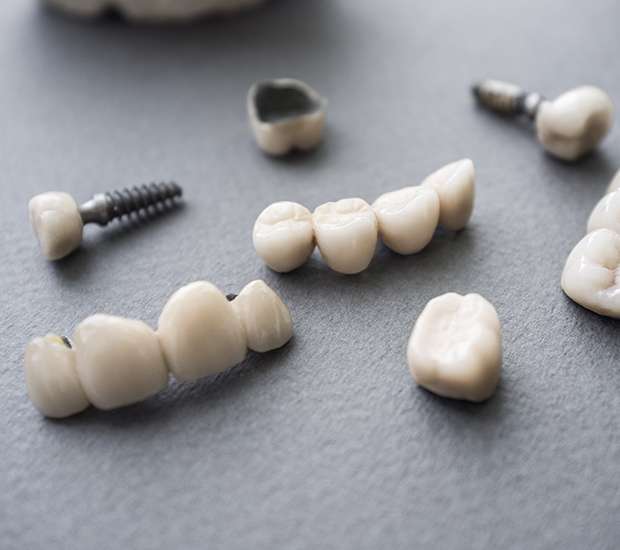
Conventional dental implants and mini dental implants are both devices placed in the jaw to support a dental restoration, but they are not simply two sizes of an otherwise identical treatment. Mini implants are narrower and are often designed differently. The restoration they support, available bone, bite forces, implant position, health history and long-term maintenance all affect whether either approach is appropriate.
A mini implant is not automatically less invasive, faster or better, and a conventional implant is not automatically necessary for every missing tooth. The comparison begins with the planned final tooth or denture and the patient's anatomy—not with choosing a device from a list.
What conventional dental implants do
A conventional implant system generally includes an implant body placed in the jaw and a component that supports a crown, bridge or denture. The U.S. Food and Drug Administration describes dental implants as medical devices used to restore chewing function or appearance by supporting artificial teeth.
Conventional systems are available in different diameters, lengths and designs. They may be considered for a single missing tooth, several teeth or an implant-supported denture when the anatomy and treatment plan support their use. Some cases require additional planning or procedures; others do not. A clinical examination and imaging are needed to assess bone dimensions, nearby structures and the proposed restoration.
What mini dental implants are
Mini dental implants are narrow-diameter endosseous implants. Specific devices have their own FDA-cleared indications. For example, some mini-implant systems are intended to stabilize removable dentures, while other narrow designs may have different intended uses. That is why the words “mini implant” alone do not define the correct restoration or treatment sequence.
Some mini systems use a one-piece design in which the implant and the part that supports the restoration are integrated. Conventional systems are often two-piece, but designs vary. These differences can affect restorative options, maintenance and what can be changed if a component is damaged.
Key differences to discuss
Planned restoration
The first question is what the implant needs to support: a single crown, a bridge, a fixed full-arch restoration or a removable denture. A device cleared for denture stabilization should not be assumed to fit every single-tooth or fixed-restoration situation.
Bone and available space
Narrow implants may be considered when the ridge or space is limited, but width alone does not decide the case. Bone quality, height, implant position, proximity to nerves or sinuses, gum tissue and the direction of load all matter. Avoiding one procedure is not beneficial if it creates an unsuitable restorative design.
Bite forces and habits
The implant and restoration must tolerate forces from chewing. Tooth position, grinding or clenching, the opposing teeth and the number and distribution of implants influence planning. No page can predict whether a specific diameter will be stable in a particular mouth.
Restoration and maintenance
Ask how the proposed teeth will attach, whether components are replaceable, how the area will be cleaned and what follow-up is required. Both implants and the tissues around them need ongoing hygiene and professional monitoring.
Benefits, risks and limitations
Dental implants can support crowns, bridges or dentures and may improve chewing and appearance for suitable patients. They also involve surgery and can have complications. The FDA lists risks such as injury to nearby teeth or tissues, infection, nerve injury, sinus problems, implant loosening or failure. Smoking can interfere with healing, and overall health can affect candidacy and recovery.
Mini implants share the fact that they are surgically placed dental implants. Their narrower design does not remove the need to review risks, hygiene, loading and long-term maintenance. Claims of “no surgery,” “no healing” or guaranteed immediate teeth are not appropriate as general promises. Some devices may be loaded promptly in selected circumstances, but that decision depends on the device instructions, primary stability, restoration and clinical judgment.
How the choice is made
A useful implant consultation usually includes:
- The number and location of missing teeth and the desired final restoration.
- Examination of the gums, remaining teeth, bite and available space.
- Appropriate imaging to evaluate bone and nearby anatomy.
- Review of health conditions, medicines, tobacco or nicotine exposure and healing risks.
- Discussion of alternatives, which may include a bridge, removable denture, conventional implant, narrow implant or no immediate treatment.
- A maintenance plan and explanation of what symptoms should be reported.
The selected system should match the diagnosis and restorative goal. If more than one approach is reasonable, the discussion should include tradeoffs rather than presenting one option as universally superior.
Implant consultations at JG Dental
JG Dental is a family, general, implant and cosmetic dental practice with offices in San Juan Capistrano and Newport Beach. This shared educational page serves patients considering care at either office. Use the office selector or booking links to choose a location. Candidacy, device selection, timing and the need for any supporting procedure can be confirmed only after an individual evaluation.
Frequently asked questions
Are mini implants the same as conventional implants, only smaller?
No. Diameter is one difference, but device design, approved use, restorative connection and maintenance may also differ. The exact implant system and planned restoration should be identified before comparing options.
Do mini implants always avoid bone grafting?
No. A narrower implant may be considered in limited space, but bone volume, quality, implant position and loading still matter. Only an examination and imaging can determine whether grafting is unnecessary or whether another plan is safer.
Can mini implants support a denture?
Some FDA-cleared mini-implant systems are intended for stabilizing removable dentures. That does not mean every mini implant or every patient is suitable. The specific device instructions and clinical plan control.
Which type lasts longer?
There is no honest universal answer for an individual patient. Outcomes depend on the device and restoration, position, bone, health, hygiene, loading and follow-up. Ask what evidence and maintenance plan apply to the exact system being proposed.
What symptoms should be reported after implant treatment?
Report looseness, persistent or increasing pain, swelling, drainage, altered sensation or a restoration that feels unstable. Facial swelling with fever, or difficulty breathing or swallowing, requires urgent assessment; breathing or swallowing difficulty is an emergency.
Sources and further reading
Choose your JG Dental office
This information is shared by the practice. Services, appointment availability and individual treatment options must be confirmed with the selected office.
San Juan Capistrano — 32382 Del Obispo St Ste C2. (949) 493-6006
Newport Beach — 1501 Superior Ave Ste 302. (949) 548-8218