
Preventative Dental Care
Preventative dental care combines daily habits with risk-based professional care to reduce the chance that tooth decay, gum disease and other oral problems progress unnoticed. It is not a single procedure or a guarantee that treatment will never be needed. The useful plan is the one matched to a person's current oral health, medical history, medications, age, past disease and ability to maintain daily care.
The American Dental Association recommends brushing twice a day for two minutes with fluoride toothpaste. Cleaning between teeth is also important because a toothbrush does not fully clean every contact area. A dentist or hygienist can tailor technique, products and visit timing to individual needs.
What preventive care includes
Daily plaque control
Use a soft-bristled toothbrush and fluoride toothpaste unless a dental or medical professional has advised otherwise. Brush all tooth surfaces gently rather than scrubbing hard at the gumline. Clean between teeth with floss, interdental brushes or another method that fits the spaces and dexterity of the patient.
Replace a worn toothbrush or brush head, and clean removable appliances as directed. Mouthrinse can be useful for some people, but it does not replace brushing and interdental cleaning. Children need age-appropriate supervision and toothpaste guidance.
Dental examinations
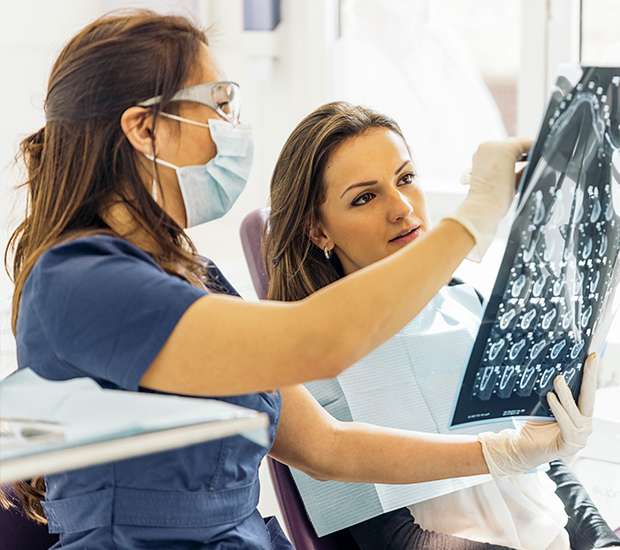
An examination can identify changes that are difficult to see at home, including early decay, gum inflammation, cracks, wear, failing restorations and suspicious soft-tissue changes. Dental X-rays are not automatically required at every visit; they are selected according to clinical findings, history and risk.
There is no single correct recall interval for everyone. A person with active decay, gum disease, dry mouth, orthodontic appliances, tobacco exposure or certain medical risks may need closer monitoring than someone with stable oral health. The interval should be set after assessment, not copied from a generic calendar.
Professional cleaning and targeted prevention
Professional cleaning removes plaque and hardened deposits that cannot be fully removed at home. It may be combined with individualized instruction, periodontal measurements and review of areas that are being missed. Fluoride treatment or sealants may be discussed when the risk and tooth surfaces make them appropriate. These measures complement daily care; they do not substitute for it.
Risk factors worth discussing
Tell the dental team about health conditions, pregnancy, medications and changes in medical care. Dry mouth can increase cavity risk, and some medicines or health conditions can affect saliva, gums, healing or the ability to perform home care. Do not stop a prescribed medicine because of an oral-health concern; discuss the concern with the prescribing clinician and dentist.
Frequent exposure to sugary or acidic drinks and snacks can increase risk. The pattern of exposure matters as well as the amount. Water is generally a better everyday drink, and a personalized nutrition discussion may be useful for people with repeated decay or erosion.
Tobacco and nicotine exposure are important to disclose. Grinding or clenching, mouth breathing, reflux symptoms and changes in an appliance or bite can also affect the preventive plan.
Warning signs should not wait for a routine visit
Preventive care includes responding early when something changes. Arrange an assessment for persistent tooth sensitivity, pain when biting, bleeding or swollen gums, a broken tooth or filling, a sore that does not heal, a new lump, bad taste or drainage, or a tooth that feels loose.
Facial swelling, fever with dental pain, rapidly spreading swelling, or difficulty breathing or swallowing needs urgent evaluation; breathing or swallowing difficulty is an emergency. Online information cannot determine the source or severity of these symptoms.
A practical home routine
- Brush twice daily for two minutes with fluoride toothpaste.
- Clean between teeth every day using a method that works for the spaces.
- Clean dentures, retainers, aligners or night guards according to their instructions.
- Limit repeated sugary or acidic exposures between meals.
- Watch for changes rather than waiting for pain.
- Keep appointments at the risk-based interval recommended after examination.
- Ask for a demonstration if brushing, flossing or appliance care is difficult.
Consistency matters more than an occasional intense cleaning session. If bleeding or discomfort makes home care difficult, ask for guidance rather than abandoning the area.
Preventative care at JG Dental
JG Dental is a family, general, implant and cosmetic dental practice with offices in San Juan Capistrano and Newport Beach. This shared page is not exclusive to one office. Use the office selector or booking links to choose a location. Recommendations, visit intervals and any proposed services are based on the findings of an individual assessment; this page does not confirm insurance coverage or promise that a particular procedure is needed.
Frequently asked questions
How often should I have a dental checkup?
The interval depends on current findings and risk. Some people need closer monitoring, while others with stable health may be seen less often. A dentist should set the interval after reviewing the mouth and history.
Is brushing enough if my teeth feel clean?
Brushing is essential, but it does not reliably clean every area between teeth. Interdental cleaning and professional assessment remain important even when the teeth feel smooth.
Why do my gums bleed when I clean between my teeth?
Bleeding can occur with gum inflammation, technique problems or other conditions. Persistent bleeding should be assessed. Use gentle technique and ask the dental team to demonstrate an appropriate method rather than assuming that bleeding is normal.
Can preventive care stop every cavity?
No. Prevention lowers risk but cannot eliminate it. Saliva, diet, fluoride exposure, existing restorations, health conditions and past disease all affect risk, so early detection remains part of the plan.
Sources and further reading
Choose your JG Dental office
This information is shared by the practice. Services, appointment availability and individual treatment options must be confirmed with the selected office.
San Juan Capistrano — 32382 Del Obispo St Ste C2. (949) 493-6006
Newport Beach — 1501 Superior Ave Ste 302. (949) 548-8218