
When Is a Tooth Extraction Necessary
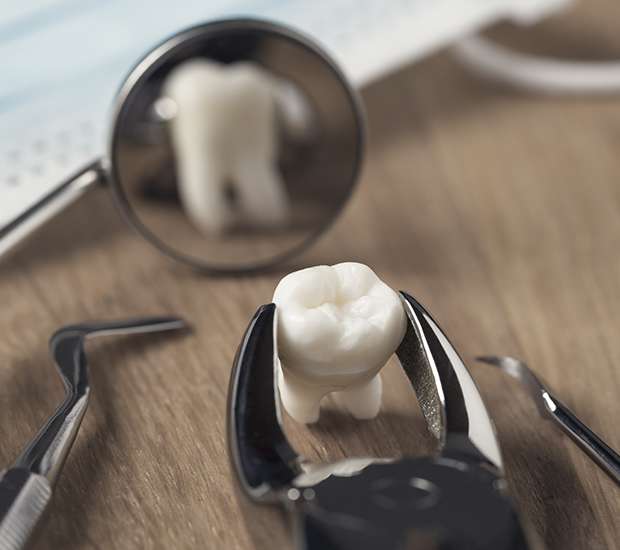
A tooth may need to be removed when it cannot be predictably repaired, when its supporting tissues are severely damaged, or when removal is part of a carefully assessed treatment plan. Decay, pain, a previous root canal or crowded teeth do not by themselves settle that decision. An examination helps compare keeping the tooth with removing it and planning for the resulting space.
Reasons a dentist may consider extraction
Possible reasons include damage from decay or an injury that cannot be restored, advanced gum disease with a poor outlook for the tooth, a serious infection in a tooth that cannot be saved, or a wisdom tooth causing disease or damage. Extraction is also sometimes included in an orthodontic plan. These are reasons for assessment, rather than a rule that every painful, loose, damaged or crowded tooth must come out.
A fall, sports injury or broken tooth deserves prompt dental assessment even when the damage looks small. The dentist checks the injury and surrounding tissues and considers whether the tooth can be repaired. A tooth that cannot be restored may require removal, but an injury alone does not establish that extraction is the right treatment.
Can the tooth be saved instead?
Depending on the problem, options may include a filling, a crown, root canal treatment or treatment of the gums and supporting tissues. A root canal treats infected or damaged tissue inside a tooth; a crown can protect a restored tooth. Neither is suitable for every situation. The remaining tooth, the root, gum support and the likely ability to restore and maintain it matter more than the number of previous procedures.
A previous root canal does not automatically make extraction the next step. If problems recur, ask whether an endodontist should assess repeat root canal treatment or another tooth-preserving approach. An endodontist is a dentist specializing in the tissues inside and around tooth roots. Further treatment can be unsuitable or unsuccessful; the choices and outlook need an individual explanation.
Before agreeing to removal, ask what makes the tooth difficult to save, what alternatives remain and what happens if treatment is delayed. Also discuss whether the space should be replaced with an implant, bridge or removable appliance, or managed in another way. These options have different requirements and risks; a replacement should not be assumed necessary or suitable without assessment.
Infection and general health
Gum disease can damage the tissues and bone that support teeth. Infection inside a tooth can also affect the tissues around its root. When the tooth is restorable, treatment may control the infection while preserving it. When it cannot be saved, removing it may be part of treating the source. Persistent pain, swelling or signs of infection need assessment rather than a decision based on symptoms alone.
Research has found associations between periodontal disease and some systemic conditions, including cardiovascular disease. An association does not establish that gum disease directly causes a heart attack or stroke. Extraction should not be presented as a way to prevent those outcomes. Dental and medical care should address the person's actual conditions and risks.
Wisdom teeth and orthodontic planning
An impacted wisdom tooth is trapped beneath the gum or in the jaw. Pain, infection, decay that cannot appropriately be restored, gum disease, a cyst or damage to a neighboring tooth may justify removal after assessment. A healthy wisdom tooth that is retained still needs monitoring; absence of pain does not replace regular examination.
Removing teeth to create orthodontic space is a separate planning decision. Ask how extraction fits the proposed tooth movements, what alternatives were considered and why the plan is appropriate for your mouth. Crowding alone is not a reason to assume that a particular tooth must be removed.
The procedure, preparation and risks
A visible, accessible tooth may be loosened and removed after the area is numbed. A broken or impacted tooth may need a surgical approach, such as access through the gum or removal in sections. The clinician explains the planned anesthesia, whether referral is appropriate and what you may feel. Discuss pain or anxiety before treatment instead of expecting a completely sensation-free procedure.
Risks can include bleeding, infection, a painful dry socket, delayed healing, damage to nearby teeth or restorations, and, in some situations, nerve injury or other surgical complications. Tell the dentist about medical conditions, allergies and all medicines, including nonprescription products. Do not stop prescribed medicines on your own; ask how your health and medicines affect the plan and aftercare.
Recovery and when to get help
Follow the clinician's written instructions for bleeding control, food, cleaning, activity and any medicines. Protect the blood clot in the socket, avoid smoking and tobacco, and do not rinse vigorously or use a straw during the period specified by your clinician. Eat the suggested foods and clean the rest of the mouth as instructed without disturbing the wound. Discuss vaping and nicotine products rather than assuming a substitute is harmless.
Some soreness, swelling and slight bleeding can occur, but recovery is not the same for everyone. Feeling better does not mean the socket and bone have finished healing. Contact the dentist or oral surgeon for excessive or persistent bleeding, fever, pus, severe or increasing swelling, or pain that is severe, persists or worsens. Trouble breathing or swallowing requires urgent medical help; do not wait for an ordinary appointment.
Choosing your JG Dental office
JG Dental has offices in San Juan Capistrano and Newport Beach. This treatment information is shared across the practice; it is not an office-specific promise of availability. Choose your office when requesting an assessment and confirm the services and appointment arrangements with that office. You can review the San Juan Capistrano office or the Newport Beach office.
Medical sources
Patient information: ADA—extractions, MedlinePlus—tooth extraction, ADA—root canals, ADA—wisdom teeth, NIDCR—gum disease, ADA—oral-systemic health, and CDA—root canal treatment and retreatment. These resources inform general education, not a diagnosis or an individual treatment plan.
Frequently asked questions
How long does recovery take?
It varies with the tooth, procedure and your health. Initial comfort may improve before the socket has healed, and bone recovery continues beyond the early stage. Follow your own instructions and review plan; do not use a fixed number of days as proof that new or worsening symptoms are normal.
Does an extraction hurt?
Local anesthesia is used to numb the area. Pressure or movement may still be felt; tell the clinician if you have pain. Soreness can occur after the anesthetic wears off. Ask which pain relief is suitable for you, taking your medicines and health into account.
What should I expect afterward?
The team explains how to control bleeding and protect the clot, eat and clean safely, and use any prescribed medicines. A small amount of bleeding or soreness may occur. Excessive bleeding, fever, pus, marked swelling or worsening pain needs advice; breathing or swallowing difficulty needs urgent medical help.
When should I consider removing a tooth?
After assessment establishes why keeping it is unlikely to be appropriate, or why removal is justified in the wider treatment plan. Ask about restoration, root canal or periodontal options, specialist assessment and the consequences of the gap. A history of several fillings or crowns is not, by itself, a reason to extract.
Can I smoke after an extraction?
Avoid smoking and tobacco because they interfere with healing. Follow the clinician's restrictions, protect the clot and discuss help with stopping. Ask specifically about vaping or nicotine substitutes rather than assuming they can be used safely during recovery.
Sources and further reading
- www.cda-adc.ca — root canal
- www.mouthhealthy.org — root canals
- www.ada.org — oral systemic health
- www.mouthhealthy.org — wisdom teeth
- www.mouthhealthy.org — extractions
- www.nidcr.nih.gov — gum disease
- medlineplus.gov — 007630.htm
- ADA—extractions
- MedlinePlus—tooth extraction
- ADA—root canals
- ADA—wisdom teeth
- NIDCR—gum disease
- ADA—oral-systemic health
- CDA—root canal treatment and retreatment
- San Juan Capistrano office
- Newport Beach office
- ADA—extractions
- MedlinePlus—tooth extraction
- ADA—root canals
- ADA—wisdom teeth
- NIDCR—gum disease
- ADA—oral-systemic health
- CDA—root canal treatment and retreatment
Choose your JG Dental office
This information is shared by the practice. Services, appointment availability and individual treatment options must be confirmed with the selected office.
San Juan Capistrano — 32382 Del Obispo St Ste C2. (949) 493-6006
Newport Beach — 1501 Superior Ave Ste 302. (949) 548-8218