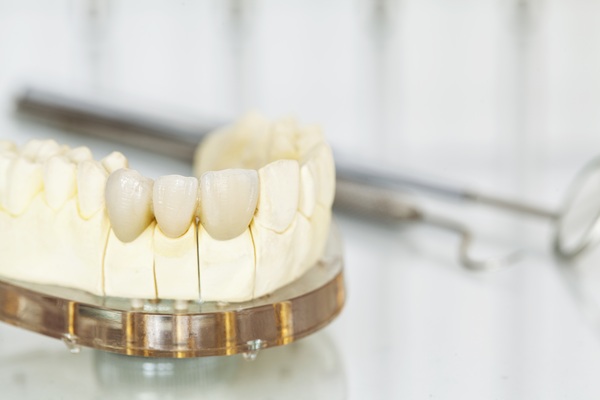
A bridge can loosen, fracture or lose support because of problems with cement, supporting teeth or surrounding tissues. A change in fit is a reason for assessment, not a signal to glue it back yourself.
Signs to notice
Movement, a new gap, pain on biting, chipping, trapped food or persistent bad taste may indicate a problem. Some decay or support problems cause little discomfort, so an apparently intact bridge still needs regular review.
What to do now
Avoid chewing on the affected area. If the bridge comes out, keep it in a clean container and contact your dentist. Do not force it into place or use household glue. Severe pain, swelling or a suspected inhaled fragment needs urgent advice; breathing difficulty is a medical emergency.
Repair or replacement?
The dentist checks fit, cement, bite, supporting teeth, gums and bone, with imaging when indicated. Recementing is reasonable only when the bridge and supports remain suitable. Decay, fracture or poor fit may require treatment of the supports, a new bridge or a different replacement.
Reducing the risk
Clean around the supporting teeth and under the false tooth using the method demonstrated by your team. Discuss clenching, grinding and changes in the bite. Maintenance lowers avoidable risks but cannot guarantee that a bridge will never fail.
Sources
Patient education, not an individual diagnosis or a claim of clinical review. Treatment and availability must be confirmed with your selected office.
Choose your JG Dental office
This information is shared by the practice. Services, appointment availability and individual treatment options must be confirmed with the selected office.
San Juan Capistrano — 32382 Del Obispo St Ste C2. (949) 493-6006
Newport Beach — 1501 Superior Ave Ste 302. (949) 548-8218